How many restrooms does a marathon or race need in Allentown?
Start with the runner count, then double it if spectators are gathering near the start or finish. A field of 2,000 runners with families watching can justify 20 to 25 standard portable restrooms spread across the course, not just parked at the finish chute. Aid stations at mile markers need at least one unit each, since dehydrated runners will not walk far off course. Allentown races that loop back through downtown can reuse units at two course crossings, which cuts the total count and the delivery footprint. ANSI/PSAI Z4.3 sets the baseline service interval at once per week for steady use, but race day is a single heavy-use event, so units get serviced right before gates open and again if the event runs past a full day. For accessibility, ADA Standards section 213.2 requires that at least 5 percent of a cluster be accessible, never fewer than one unit, so a bank of eight standard units at the finish line needs an ADA accessible unit in the mix. We also recommend a few deluxe flushable units near VIP or sponsor tents if your race has them. If your event pulls from Bethlehem or the Lehigh Valley generally, note that Bethlehem sits 7.3 miles east of Allentown, close enough that racers often drive in the morning of, which raises early lot traffic and restroom demand at the start line before the gun even fires.
Where should restrooms and power go along the course?
Placement follows the same logic as any outdoor event: stable ground, sight lines for the timing crew, and clearance for service trucks. ADA Standards section 302.1 requires the ground under and around each unit be stable, firm and slip resistant, which rules out soft turf after rain unless you lay mats first. Our porta potty placement guide covers turning radius and door swing in more detail, but the short version for race organizers: leave 60 feet of straight clearance behind any roll-off dumpster or trailer delivery, since that is what our trucks need to back in and drop safely. Timing systems, PA announcers and light towers along a night start often run off a temporary power pole, and how to brace a temporary power pole matters more on race day than almost any other site: the pole needs a stable base plate, guy wires staked well clear of the runner lane, and cabling routed so it never crosses a path where a runner or volunteer could catch a foot on it. Loose bracing on uneven grass is the most common failure we see at finish-line power setups. If your race also needs light towers for a pre-dawn start or an evening finish, plan the power pole and the lighting together so one crew handles both instead of running two separate cable paths across the course. Crowd barriers along the chute should meet OSHA 1926.202's ANSI D6.1 standard where volunteers are working the line, and our crowd control barrier rental page has the layout options.
What does restroom rental cost for a race in Allentown?
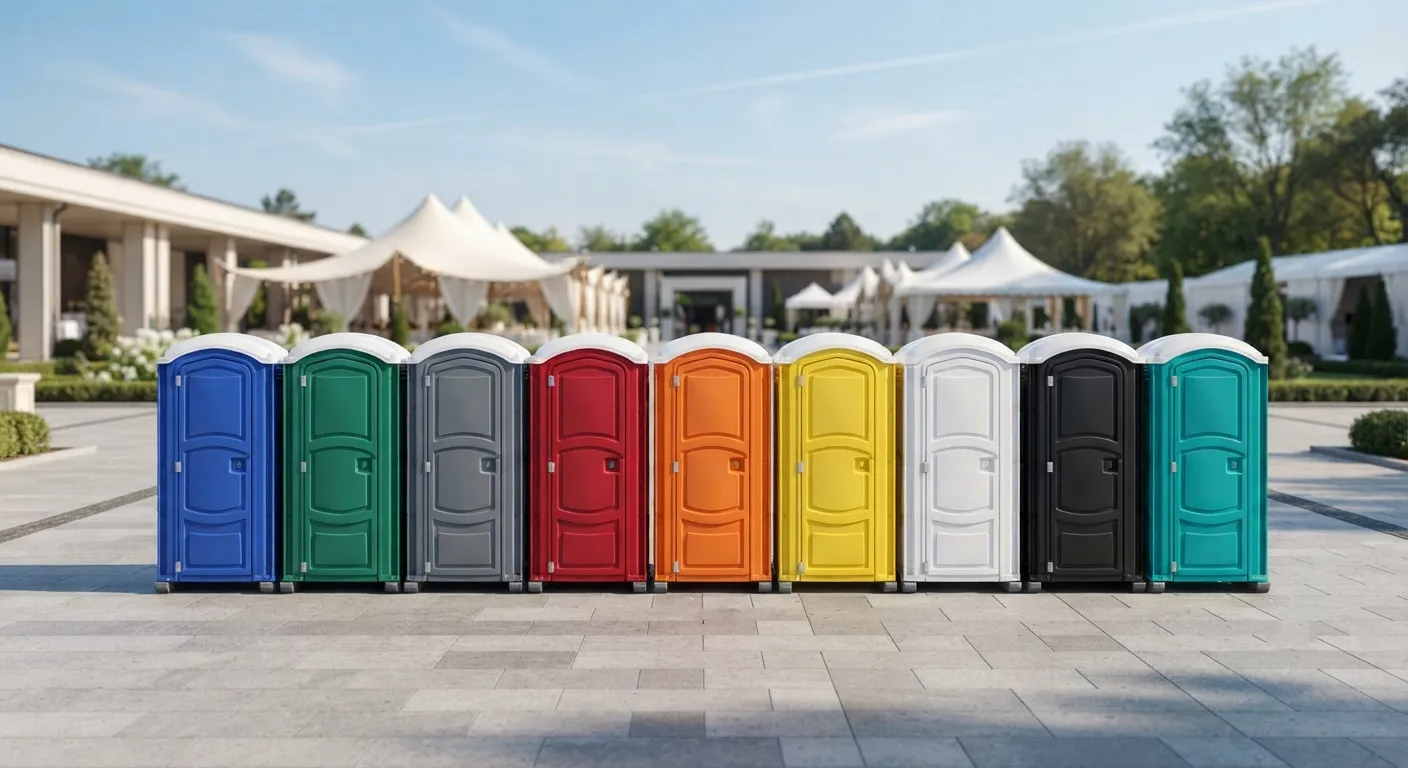
Pricing depends on unit type, event length and whether you need standby staff for a single-day sprint through a multi-day festival weekend. A standard portable restroom for a single event day runs in the range shown below, and a bank of units for a full race weekend costs more than a one-day rental but less per unit than renting the same count for a full week.
| unit | duration | typical price |
|---|---|---|
| standard | day | $150 |
| standard | event | $400 |
| ada | day | $230 |
| trailer | event | $3,500 |
| delivery_fee | day | $150 |
Larger races with sponsor villages sometimes add a restroom trailer for staff and VIPs, and our restroom trailer rental cost page breaks down the difference between a 2-stall unit and an 8-stall unit. For a full breakdown of what drives the number up or down, see porta potty rental cost or check the per-day rate if your race is a single Saturday morning event. Races near South Whitehall, 5.5 miles northwest of Allentown, or Lower Macungie, 8.9 miles southwest, often share a delivery run with our Allentown routes, which keeps the delivery fee toward the lower end of the band.
How far in advance should we book race restrooms?
Book as soon as your course map and runner count are set, ideally 60 to 90 days out for a race over 1,000 runners. Permit review and city coordination take time, and race weekends compete with weddings and festivals for the same trucks. See our porta potty rental checklist for a full timeline.
Do we need a permit for restrooms placed on city streets?
Placement in the public right of way needs confirming with the city before race day. Check our porta potty permit requirements page, and loop in your race director's city liaison early since street closures usually require separate sign-off anyway.
How many restrooms do we need for a 5K versus a full marathon?
A 5K with 500 runners might need 6 to 8 standard units clustered at start and finish. A full marathon with 2,000 or more runners needs units spread across aid stations, not just the finish, per our how many porta potties do I need guide.
Can we get restrooms serviced mid-race if the event runs long?
Yes, for events running past a single day, we schedule a mid-event service visit so units stay usable through the finish. Let us know your event window when you request a quote so we can staff the return visit.
What about handwashing at aid stations?
Aid stations handling food or gel packets should pair each restroom cluster with a handwashing setup. Our handwashing station rental page covers unit options, and 29 CFR 1910.141(d)(2) requires soap and towels or a hand-drying device, not sanitizer alone.
Next step
Get a delivery date
Tell us the address, the dates and the headcount. We size the order and confirm the route.