How Do Porta Potties Work?
The basic unit is a plastic booth over a holding tank, sized to about 44 by 48 inches on the ground and standing roughly 92 inches tall. There's no water intake and no drain line. Waste drops straight into the tank, where a chemical treatment mixture, usually blue, works to break it down and hold odor while the unit sits on site. A vent stack pulls air up and out instead of back into the booth. When Allentown Porta Pros comes out for service, a technician vacuums the tank through a valve, rinses it, and adds fresh chemical before locking it back down. For a standard portable toilet rental on a job site, that service happens on the interval set at booking, whether it's a porta john rental for a small crew or several units for a bigger site. If you're comparing unit types before you commit, the standard porta potty rental page breaks down what comes standard versus what's an upgrade.
How Does a Portable Sink Work?
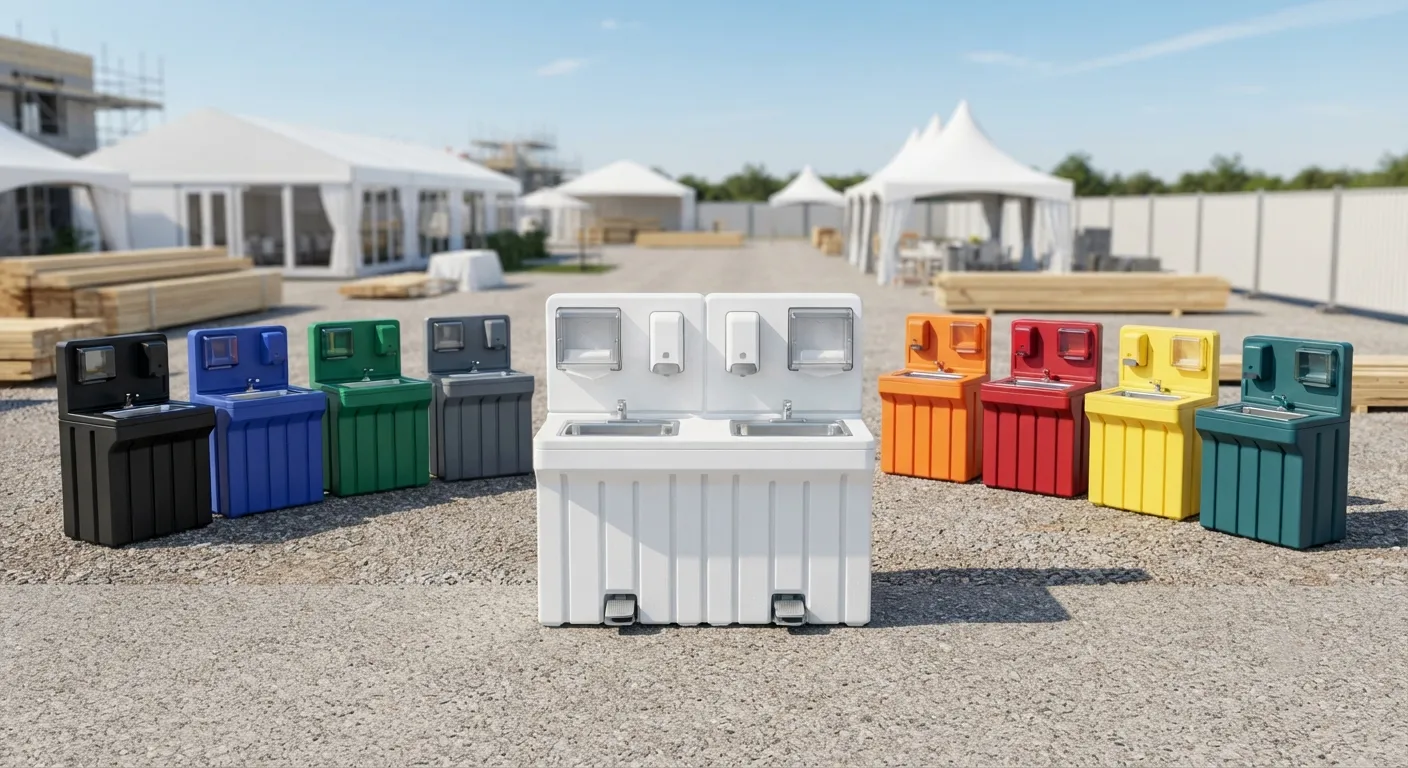
A portable sink runs on a fresh water tank up top and a gray water tank below, with a foot pump or hand pump moving water through the faucet. There's no plumbing hookup needed, which is why they show up next to porta potties on construction sites and food events around Allentown. Soap and paper towels sit in built-in dispensers. Under 29 CFR 1910.141(d)(2), washing facilities need soap and towels or a hand-drying device, hand sanitizer alone doesn't satisfy that. A handwashing station rental or portable sink rental covers that requirement without a water line. Crews doing painting, coating, or pesticide work have a separate rule to know about, covered on the handwashing requirements page, since OSHA 1926.51(f)(1) specifically addresses washing after contact with paints, coatings, herbicides or insecticides.

How Do Flushable Porta Potties Work?
A flushable unit, sometimes called a deluxe model, uses a small onboard freshwater tank and a hand or foot pump to push a rinse of water through the bowl after use, similar to a camping toilet setup. The waste still lands in the same style of holding tank underneath, just with a flush cycle added on top. It's a step up in comfort without needing a hookup to a building. Allentown Porta Pros stocks these as a deluxe flushable porta potty option, priced above standard units because of the added plumbing inside the shell. For anyone weighing options before an event or a long job, the porta potty rental cost page lays out where deluxe pricing lands against standard.
Why Do Construction Sites Need Porta Potties?
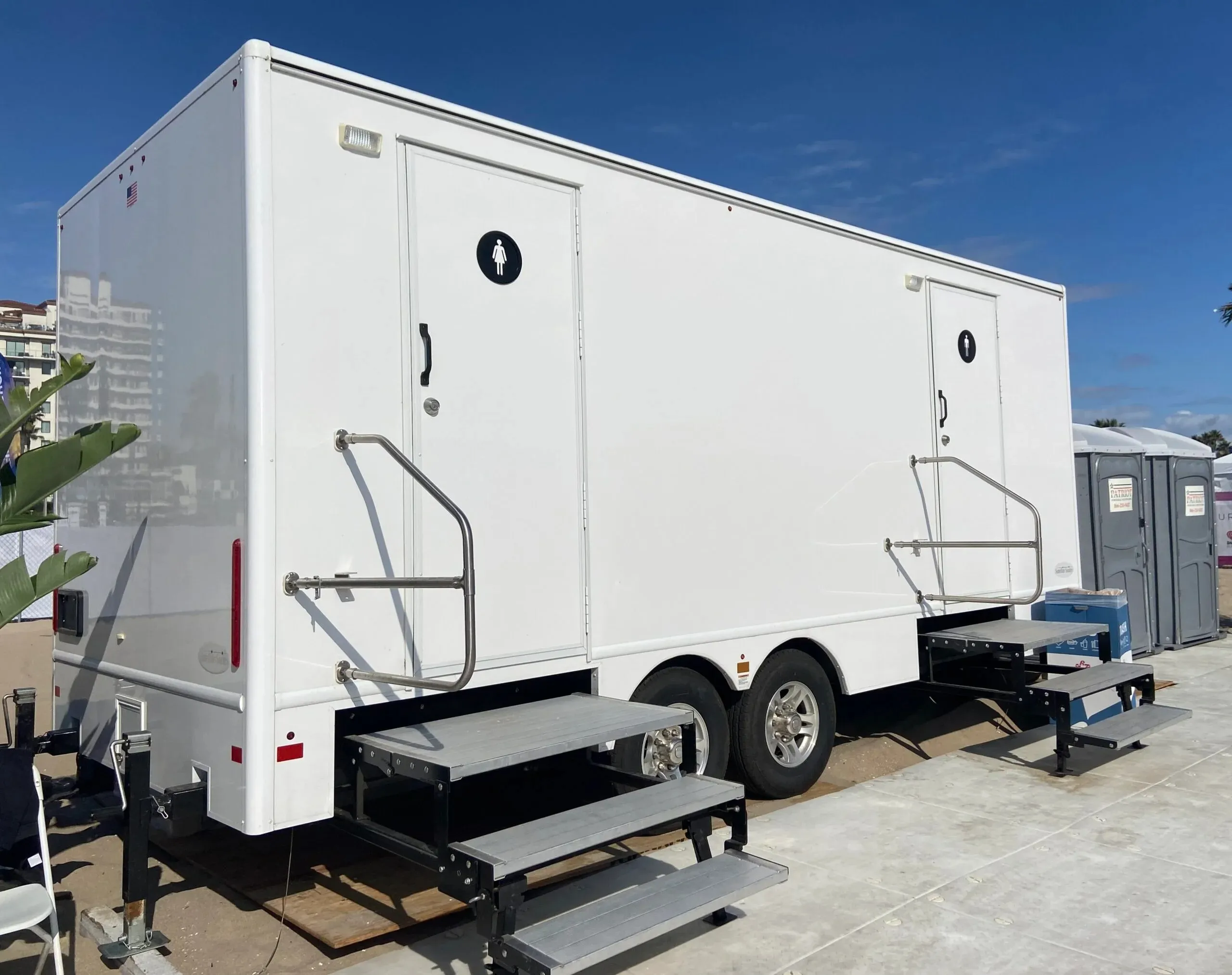
OSHA 1926.51(c) sets the ratio: one toilet facility for 20 workers or fewer, then one toilet seat and one urinal per 40 workers once headcount passes 20, dropping to one per 50 workers at 200 or more. That's why a construction worker running to a porta potty during a break isn't optional planning, it's a count based on crew size. A general contractor in Allentown building out a site with 35 workers needs to hit that second tier, not just drop one unit and call it done. The OSHA portable toilet requirements page walks through the math by crew size, and how many porta potties do i need turns that into a straight number. Water matters too. OSHA 1926.51(a)(1) requires an adequate supply of potable water at all places of employment, which is part of why construction site services bundles a handwash station with toilets instead of treating them separately. Sites needing accessible units should also check ADA Standards section 213.2, which requires at least 5 percent of clustered single-user units to be accessible, covered fully on the ada accessible porta potty page.
Frequently Asked Questions
What chemicals go in a porta potty tank?
The standard treatment is a blue deodorizing chemical that breaks down waste and controls odor between services. It's not the same product used in a septic tank cleaning chemical treatment, which targets a much larger tank and different bacteria balance. Allentown Porta Pros uses commercial-grade treatment on every unit, restocked at each scheduled service visit.
How often does a porta potty get serviced?
Weekly service is the baseline for lighter use, roughly ten users across a standard 40-hour week per industry standard ANSI/PSAI Z4.3. Busier construction sites or events in Allentown often need twice-weekly or daily visits. Check how often are porta potties cleaned for the breakdown by use case.
Do camping porta potties work the same way?
Yes, camping units use the same holding-tank-and-chemical setup as job site units, just in a smaller footprint for easier hauling. Some fold down or detach into two pieces for transport. The camping porta potty page covers sizing for group trips versus solo camping needs.
Can a porta potty overflow between services?
It can, if usage outpaces the tank's 60 to 70 gallon capacity before the next scheduled pump-out. That's why crew size and service frequency need to match. Sites near South Whitehall or Bethlehem sometimes underestimate headcount growth mid-project, which is a common reason to call for an emergency porta potty rental swap.
Is a portable toilet different from a septic holding tank?
Yes, a porta potty is self-contained and moves as a unit. A septic holding tank sits fixed underground and needs a pump truck on site, typically every 3 to 5 years for a residential tank. For fixed-location needs, holding tank rental and septic pumping service are the better fit than a portable unit.
Next step
Get a delivery date
Tell us the address, the dates and the headcount. We size the order and confirm the route.